


Sustainable Innovations that Disrupt: Part 1
- Dec 12, 2017
- 3 min read
Naturally sustainable fashion solutions...
I recently watched a short film by AEG titled ‘The Next Black’, a film focusing on the future of clothing. Watching this video has alerted me to the extent to which the fashion industry has impacted our environment, and need for the world to wake up to the future of fashion…
With the ever increasing demand for faster fashion comes the exhaustion of natural resources, vast amounts of waste and pollution. All these problems are consequential to mass production of product and each proves heavily damaging to the natural world. However, fast fashion is not concerned with the environmental issues it perpetuates, it’s only concerned with the ‘now’. Unfortunately this attitude is not sustainable and must be tackled in order to help preserve eco-systems and resources.

Sustainable fabric dying:
In the film Sophie Mathers from the YEH Group (Thailand) gives the viewer an introduction to the term ‘Dry Dye', a waterless dying process. It uses supercritical carbon dioxide to dye fabric, a gas as opposed to liquid. This means it’s cleaner, and more eco-friendly. Adding to this the carbon dioxide used gets recycled for future use. The website states that using the process ‘eliminates all water in the dyeing processes’. Drydye technology uses 50% ‘less energy and pure dyestuffs with no chemical additives’ and creates fabrics that produce no pollution. The fashion industry needs to adopt this fabric dying process as ‘water scarcity and increased environmental awareness are worldwide concerns causing a sharp rise in prices for intake and disposal of water’.

Over consumption:
Patagonia’s Rick Ridgeway had a segment in the film and he had two main issues with fast fashion 1) Re-buying clothing that can be fixed and 2) Over consumption. Instead of facilitating fast fashion, fix your clothes… Billions of pounds worth of clothing is thrown away just in the UK each year. That’s why Ridgeway has brought back Patagonia's repair kit to encourage customers to fix instead of replace. By consumers fixing their clothing they have a more intimate relationship with them as effort has been made to prolong their life. Ridgeway also commissioned a fast fashion AD campaign for Patagonia in the New York Times on Black Friday in 2011. However this ad campaign had a twist, next to a photo of one of their latest jackets it was titled ‘You Don't Need This Jacket’. A brave move was made by Patagonia in order to encourage consumers to only buy what they need as opposed to what they want. His efforts to lower consumption levels come from love of the outdoors. With fast fashion increasingly polluting the planet, along with climate change the sights that were once there are rapidly disappearing.
Bio Couture:
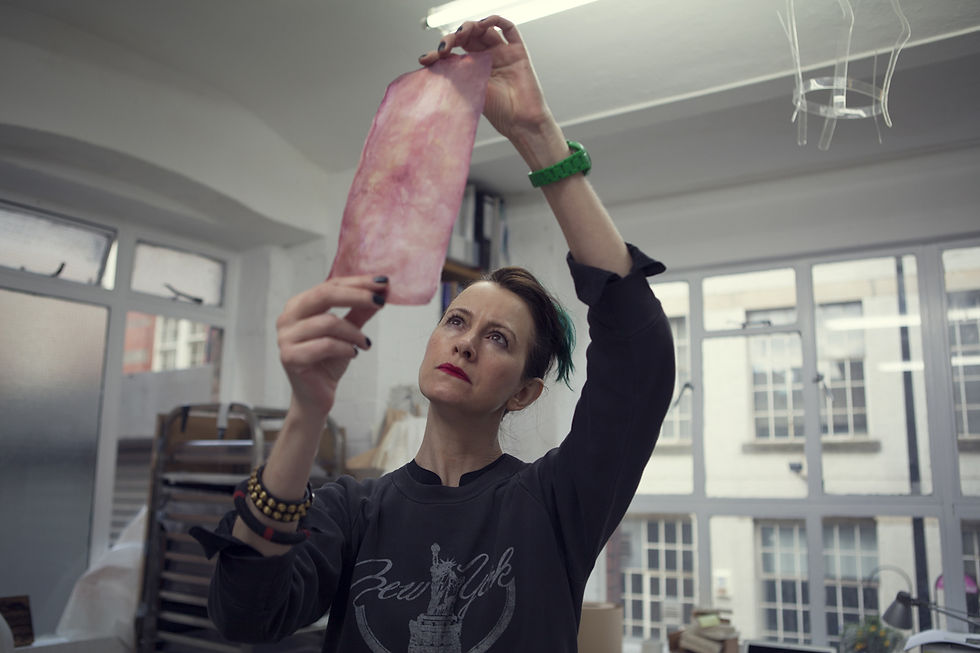
Using totally natural ingredients Suzanne Lee brews her own textile. Green tea, sugar, acetic acid, and starter culture (yeast + bacteria) means she can produce material within her garage, kitchen, or bathroom as it’s a similar process to brewing beer. This offers an alternative to tradition textile production in large factories. Adding to this the materials can be genetically manipulated to add properties e.g. water repellent, nutritional value to skin. Bio-engineered clothing could reduce the amount of waste the fashion industry creates and offers another route on the road to sustainability.

The question is it possible to change such a big industry like the fashion industry?


Comments